In times of crisis, leaders wield more than just political power. They harness the art of rhetoric in a bid to unite their nations towards a common goal. South Africa, with a tumultuous history marked by apartheid, has seen leaders employ persuasive communication to navigate challenges.
For instance, in the 1990s then-president Nelson Mandela appealed to patriotic sentiments. He often used reconciliatory rhetoric to help smooth the transition from centuries of colonial and apartheid oppression to democracy for South Africans.
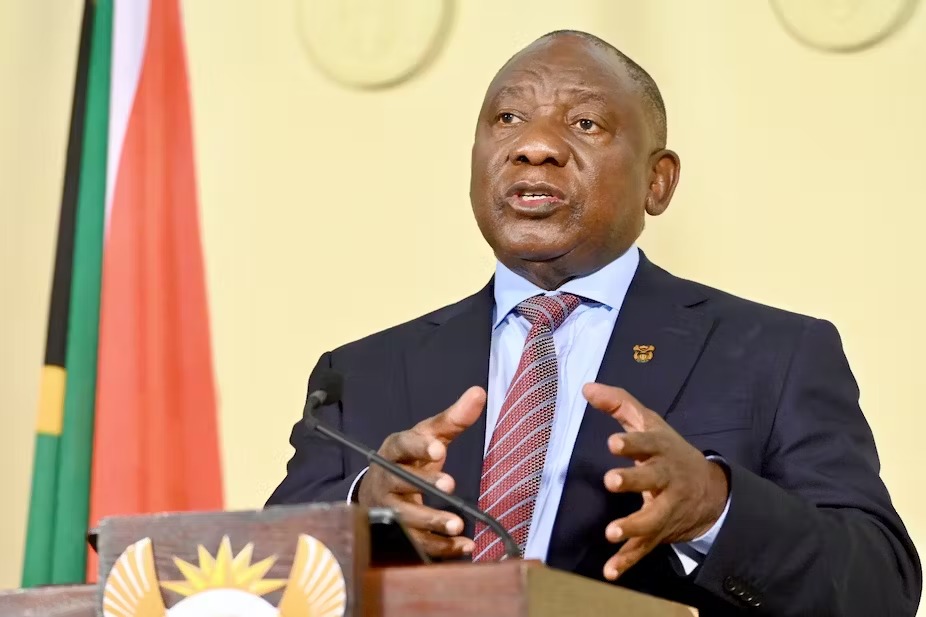
In 2020, at the outbreak of the COVID-19 pandemic, President Cyril Ramaphosa faced the challenge of steering the country through one of its biggest crises since democracy in 1994.
I’ve been a media and rhetoric scholar for a decade. My colleague and I examined Ramaphosa’s communicative approaches during the pandemic. Our paper on his speeches looked at how leaders use their speeches to unify citizens amid turmoil and uncertainty.
In his regular televised addresses, commonly known as family meetings, Ramaphosa tried to promote nation-building. The pandemic had exposed the nation’s deeply entrenched economic and social divisions. Fostering social cohesion and unity was vital to improving the overall response to the pandemic.
A unified and socially cohesive society was more likely to adhere to health guidelines, cooperate in efforts to control the virus, and ensure that vulnerable populations had access to necessary resources and support.
Rallying cry
We analysed the four speeches Ramaphosa delivered in the early stages of the pandemic – between March 24 and April 21. These speeches, when COVID-19 cases were still relatively low, but uncertainty loomed large, provide a critical window into Ramaphosa’s leadership and persuasive techniques.
We observed that Ramaphosa’s communication style bore distinct traits of what has been “Mandelaism” by some academics to rally South Africans behind a common cause. So-called after the iconic statesman, Mandelaism refers to rhetoric that appeals to patriotism to promote national unity and reconciliation. It is
Additionally,
This rhetorical approach tends to discourage dissent, underpinning the belief that all South Africans share the same goals.
Our analysis of Ramaphosa’s rhetoric and its parallels with Mandelaism provides a case study of leadership and communication in times of crisis. It offers lessons for current leaders and scholars, highlighting the enduring influence of historical figures like Nelson Mandela on the rhetoric and leadership styles of their successors.
Ramaphosa’s rhetoric
Little scholarship exists on Ramaphosa’s political-ideological convictions and philosophy or describes his approach to persuasion. The historian Tom Lodge has observed that
The COVID-19 crisis forced Ramaphosa to communicate continuously. It provided an opportunity for rhetorical critics and scholars to consider how he used persuasive techniques, and how these might point to his ideas about the South African nation.
Ramaphosa frequently began his addresses with the inclusive greeting, “My fellow South Africans”. This sought to invoke a sense of belonging and unity. As a linguistic technique it primed citizens to connect with the ideals of togetherness, inclusivity and reconciliation. These are all critical components of Mandelaism.
Ramaphosa’s rhetoric also emphasised reconciliation. He urged citizens to remember past hardships they had overcome together. This appeal to historical resilience reinforced the idea that South Africans unite in moments of great crisis. It echoed Mandela’s ability to unify a nation divided by apartheid. For example, in a speech delivered on 9 April 2020 Ramaphosa said:
He downplayed the diverse perspectives and experiences of South Africans to promote the unity narrative.
A significant aspect of Mandelaism is its close association with corporate entities that fund Mandela-related projects. Ramaphosa also incorporated business as a force for good in his speeches. He portrayed business as integral to the fabric of a reconciled South Africa.
Lessons for uniting nations
South Africa’s journey from apartheid to democracy and its response to the COVID-19 pandemic provide rich examples of the role of political rhetoric. These historical instances serve as invaluable lessons for leaders worldwide facing the daunting task of uniting their nations during times of uncertainty and turmoil.